
Tinnitus Treatment in Toronto: What Are Your Options?
If you live in Toronto and have tinnitus, you’ve probably searched something like “Tinnitus cure near me,” and then the internet gave you 47 tabs, three miracle supplements, a sound machine, and one guy on a forum who says he cured it by eating pineapple upside down.
So today, let’s cut through that noise.
What are your real tinnitus treatment options in Toronto? And, just as important, what should you be careful about?
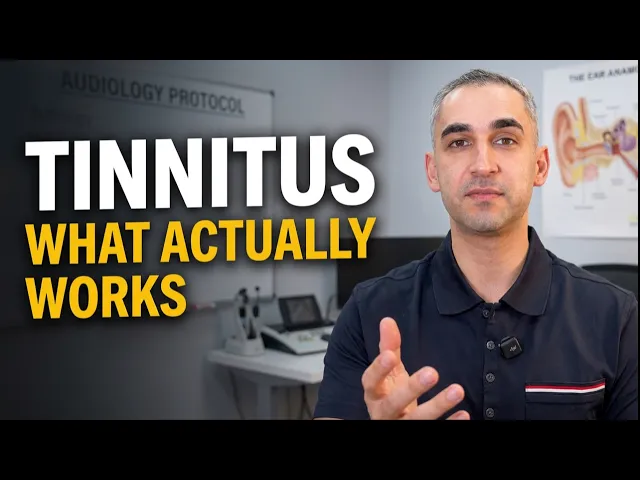
My name’s Dario Coletta. I’m a Doctor of Audiology, a Master of Science in Audiology, and a lecturer who has helped hundreds of people across Toronto achieve better hearing and solve complex cases of hearing loss… and today, we’re going to debunk some common myths with facts, not fear.
Your Real Options for Tinnitus Treatment in Toronto
First, let’s say the honest thing: For most people, tinnitus is not treated with one magic cure. It is managed with a plan.
That plan depends on what’s causing it, how long it’s been there, whether hearing loss is involved, how much distress it causes, and whether there are medical red flags.
So option number one in Toronto is a proper hearing and tinnitus assessment.
Not just “Do you hear ringing? Okay, here’s a brochure.”
A real assessment should look at your hearing, tinnitus symptoms, medical history, sound tolerance, lifestyle, sleep, and stress, and whether referral is needed.
The National Institute for Health and Care Excellence (NICE) tinnitus guidance recommends proper assessment and recognizes that tinnitus care may involve hearing-related management, amplification, sound therapy, and psychological support, depending on the person’s needs.
Option number two: medical referral when needed.
Most tinnitus is not dangerous, but some tinnitus symptoms need medical attention.
If your tinnitus is sudden; only in one ear; pulsing like a heartbeat; or connected with sudden hearing loss, dizziness, facial weakness, or neurological symptoms, don’t sit around trying rain sounds.
NICE recommends urgent referral when tinnitus occurs with sudden hearing loss developing over three days or less within the past 30 days.
That is a “get assessed properly” situation.
Option number three: hearing aids, when hearing loss is part of the picture.
This is one of the things people most commonly miss.
They think, “I have tinnitus.”
But often the bigger picture is: “I have tinnitus and untreated hearing loss.”
When the brain is missing sound input, tinnitus can become more noticeable. Hearing aids can help by restoring access to external sound, reducing listening effort, and sometimes including sound therapy features.
But they aren’t magic. They need to be fitted properly.
Option number four: sound therapy.
This can include white noise, nature sounds, low-level music, sound generators, phone apps, bedside sound, or hearing aids with built-in tinnitus programs.
The goal is usually not to drown the tinnitus out.
The goal is to reduce the contrast between tinnitus and silence so the brain stops treating tinnitus like a five-alarm emergency.
Option number five: CBT or tinnitus-focused counselling.
This is where some people get defensive and say, “So you’re saying it’s psychological?”
No. I’m saying tinnitus is a real sound perception, and your nervous system’s reaction to it matters.
There is evidence of cognitive behavioural therapy helping reduce tinnitus-related distress, and guidelines commonly include psychological therapies for people who are struggling significantly with tinnitus.
CBT does not mean the sound is fake. It means we’re helping the brain to stop panicking every time it notices it.
Option number six: tinnitus retraining therapy-style approaches.
These typically combine counselling and sound therapy over time.
The idea is to help the brain habituate, meaning the tinnitus becomes less intrusive and less emotionally charged.
Not gone overnight. Less powerful. That’s often the real goal.
Now, what should you be careful about?
Be careful with anyone promising a guaranteed cure.
Be careful with expensive supplements marketed like secret science.
Be careful with anyone who skips the hearing test.
And be very careful with anyone who treats tinnitus like it’s exactly the same for every person.
Toronto has audiology clinics, hospital-based hearing services, tinnitus clinics, and mental health professionals who may offer support for tinnitus-related anxiety, sleep difficulty, or distress. For example, Toronto-based services publicly list tinnitus management or tinnitus treatment as part of their care offerings.
But the name of the service matters less than the quality of the plan.
So, what are your tinnitus treatment options in Toronto?
Start with an assessment.
Rule out medical red flags.
Treat hearing loss if it’s present.
Use sound therapy strategically.
Consider CBT or counselling if tinnitus is affecting your sleep, mood, or quality of life.
And avoid “miracle cure” marketing.
The goal is not to fear tinnitus. The goal is to understand it, manage it, and take away its power.
Subscribe to our YouTube channel, like the video, and share it with someone in Toronto who’s been told, “Just live with it.”
Because “Just live with it” is not a treatment plan.
Request a Callback
Search